Pho, a Vietnamese tradition older than you might think
Pho was born at the turn of the 20th century in northern Vietnam, around Hanoi and the province of Nam Định. A popular dish originally prepared by street vendors, it became a national symbol after the reunification of the 1970s and is now served from Vietnam to New York via Paris. The recipe may look simple, beef broth, rice noodles, fresh herbs, but it actually conceals a goldsmith's work. A good pho relies on a broth clarified for several hours, spices measured to the gram, meat sliced cold and fresh herbs served on the side.
Two main schools coexist: phở bò (with beef), highly codified, and phở gà (with chicken), rarer outside Vietnam but increasingly sought after. Phở tai, a variant with rare marinated beef, is often considered the most demanding version, the meat must cook solely from the hot broth poured just before service.
How to recognise a good pho: five reliable clues
First clue: the clarity of the broth. A well-made pho comes with a golden, translucent liquid, without deposit or uniform fat film on the surface. The aromas should evoke cinnamon, cardamom, star anise, toasted ginger and grilled onions, never an industrial stock cube. Second clue: salt balance. The kitchen should not force it on the fish sauce. A properly served pho arrives barely salted; the diner adjusts with nước mắm, sriracha, hoisin and lime.
Third clue: the noodles. They should be firm yet supple, with a real bite. If they stick or become floury after three minutes, the broth lacks heat or the noodles were pre-cooked too long. Fourth clue: the meat. Beef should be thinly sliced, arriving either just cooked or completely raw, and in that case, cooking in a minute from the broth. Fibrous, grey texture betrays pre-cooked beef left out. Final clue: the herbs. A real pho comes with a platter: Thai basil, coriander, mint, bean sprouts, lime, fresh chillies, added at the last minute to preserve the aroma.
Pho vocabulary: bò, tái, bò viên and bánh phở
In front of a Vietnamese menu, a few words are enough to understand what the bowl contains. Bánh phở refers to the flat rice noodles that give the dish its name: wide and supple, they are quite different from the thin vermicelli of a bobun. Phở bò means a beef soup, phở gà a chicken version, rarer outside Vietnam. Phở tái signals raw beef sliced very thin, placed in the bowl and seared by the broth poured piping hot at the moment of service. Bò viên, finally, are beef meatballs with a bouncy texture, served on their own or alongside another cut.
The meat vocabulary mostly covers slow-cooking cuts. A classic phở bò relies on brisket, chuck or tendons, simmered until tender, which give the broth its roundness. That same broth, clarified for several hours and scented with cinnamon, cardamom, star anise, toasted ginger and grilled onions, is the common base of every version. It deliberately arrives barely salted: nước mắm, sriracha, hoisin and lime are there so that everyone can adjust their own bowl at the table.
Knowing these words changes the way you order, because the versions combine. A single bowl can bring together raw and cooked beef, or pair a cut with meatballs, which menus often call the special. The rest happens on the platter of fresh herbs, Thai basil, coriander, mint, bean sprouts, lime and chillies, added at the very last moment. With these landmarks in mind, choosing your pho becomes a matter of taste, not translation.
Which pho to start with when discovering Vietnamese cuisine
For a first bowl, there is no need to know the whole menu: you only need to decide whether you prefer a melting, slow-simmered meat or a pink meat seared at the last moment by the broth. This choice between cooked and raw beef is the real dividing line between the beef versions, and we have detailed it in a separate guide: phở bò or phở tái, the real difference, covering the cooking, texture and taste of each.
The undecided can also sidestep the question with a bowl that brings several meats together, what menus often call the special: in a single meal you taste the different textures the dish lives on, before choosing your favourite version on your next visit. And nothing stops you from asking the team for advice depending on your appetite.
At Phở 98, the beef pho is prepared with marinated meat and a broth clarified for several hours, and the house also offers a chicken alternative, phở gà, for those who prefer a gentler poultry flavour. At lunch, pho is part of the set menus with a starter and dessert, a good way to try a version without worrying about the rest of the meal. Whatever you choose, remember to add the fresh herbs, lime and chilli at the last moment to tune the bowl to your taste.
How to eat pho: taste, compose, alternate
The first gesture, before adding anything, is to taste the broth plain, with the spoon. It carries the whole bowl: it deliberately arrives barely salted and deserves to be enjoyed on its own, long enough to recognise the cinnamon, star anise, cardamom and toasted ginger, before seasoning it to your liking.
Then comes the time to compose. Tear the Thai basil, coriander and mint straight into the bowl, add a handful of bean sprouts for crunch and squeeze a wedge of lime. Fresh chilli goes in as slices, with caution, since it keeps releasing its heat into the hot broth. With a phở tái, this is also the moment to push the slices of raw beef into the still steaming liquid so that they cook just right.
As for sauces, hoisin and sriracha are served at the table. Rather than pouring them into the broth, many people prefer to put them in a small dish to dip the pieces of meat: the broth keeps its clarity and balance. Finally, you eat with chopsticks for the noodles and meat and a spoon for the broth, alternating between the two. Pho is not always a soup, by the way: its wok-fried cousin, phở xào, is served without broth and eaten with chopsticks alone.
Habits also vary with the region the bowl comes from. In northern Vietnam, the birthplace of the dish, Hanoi pho is clearer and less sweet; further south, Saigon pho is richer and comes with more garnishes. The platter of herbs and condiments is there precisely so that everyone finds, at the table, the balance they prefer.
Which pho to pick on our menu, from the special to pho saté
At Phở 98, pho is not a single dish but a family. The phở spéciale brings together raw beef, cooked beef and beef meatballs in the same bowl: it is the most complete version, the one that lets you taste in a single meal the three textures the dish lives on. Those who already know what they like can go straight to the pho with raw beef, the pho with cooked beef or the pho with beef meatballs, each served on its own. An in-between version pairs raw beef and meatballs, keeping the contrast between the pink meat and the bounce of the meatballs without multiplying the toppings.
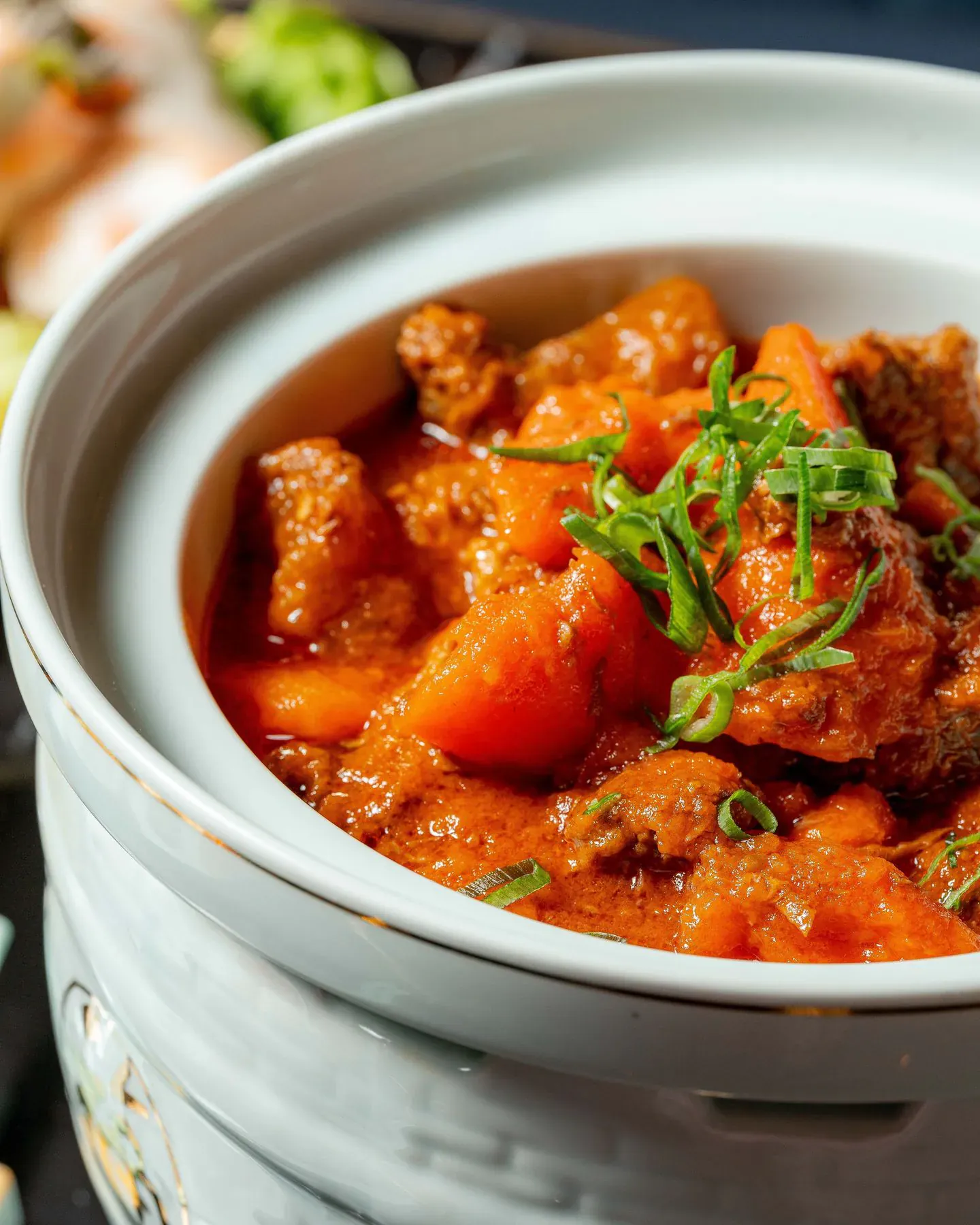
The menu also keeps two detours for curious palates. The beef phở saté is the spicy version of the house, driven by saté paste: it is the bowl to choose when you want a genuinely spicy soup, in the spirit of the Sichuan dishes we serve in the evening. The rice noodle soup with beef stew plays a different tune, more simmered and denser than the clear pho broth. Finally, a vegetarian rice noodle soup is on the menu for those who do not eat meat, with the same rice noodle base.
One last setting before ordering: the noodles. Beef pho is served with rice noodles by default, true to tradition. On several other soups, including the phở saté and the beef stew soup, you are asked to choose between rice noodles and stir-fried noodles when ordering: the former stay neutral and let the broth speak, the latter bring a more pronounced bite. Our full menu is available online and updated every week, with the same dishes in the dining room, for takeaway and for delivery.
Where to eat pho in Paris 9th and nearby
The 13th arrondissement remains the undisputed reference for Parisian pho, carried by historic houses like Pho Tai, Pho 14 or Comme au Vietnam. But for a few years now, new addresses have been opening in central arrondissements, especially around the Sentier and the 9th. At the heart of Faubourg Montmartre, Phở 98 offers a chic reading of pho: broth clarified for six hours, marinated beef and fresh noodles plated in a salon inspired by early-20th-century Parisian brasseries. Our pho is also on our lunch sets, with a starter and dessert for a complete and fast midday meal.
Pho lovers can also head to Mắm From Hanoï near the Sentier, Song Heng in the 3rd, or Dong Huong in Belleville. These addresses share one point: a broth prepared every morning and fresh noodles delivered daily. For a more festive version with a chic decor, Phở 98 complements the neighbourhood's offer with its Sichuan hot pots and bobun served in the evening. To discover all our dishes, check our online menu.
The 9th arrondissement, a district for gourmets
The 9th arrondissement has always been gastronomy country. The Grands Boulevards saw the birth of the first popular bouillons at the end of the 19th century, with Chartier as an emblematic figure. The covered passages, Passage Jouffroy, Passage Verdeau, Passage des Panoramas, still concentrate tea shops, bistros and chocolatiers today. Near the Opéra Garnier and the major department stores, the district mixes local clientele, international tourists and professionals working near Richelieu-Drouot, Cadet or Pigalle.
It is in this context that Phở 98 opened at 45 Rue du Faubourg Montmartre. The house plays on contrast: outside, a discreet facade; inside, a golden salon with velvet banquettes and a crystal cascade. This staging aims to take Vietnamese and Chinese cuisine out of its usual codes (neon lights, glossy tables) and bring it closer to the Parisian brasserie experience. The 9th thus becomes, alongside the 3rd and 13th, one of the neighbourhoods where you can enjoy a Vietnamese soup in a refined setting.
Pho to dine in, take away or have delivered: how to keep the broth at its best
A good pho is judged first at the table: the broth arrives piping hot, the noodles are still firm and the fresh herbs (Thai basil, coriander, mint, bean sprouts) go in at the very last moment. This sequence is what preserves the aroma of the spices and the depth of a broth clarified for several hours. Dining in at 45 Rue du Faubourg Montmartre, you control every gesture: squeezing the lime, dosing the sauce, plunging the meat into the still steaming liquid. For the full experience, it is best to book via TheFork, especially in the evening when the Opéra and Grands Boulevards area fills up quickly.
Delivery meets another need: enjoying a quality pho at the office or at home without going out. Phở 98 is available via Citron 8, Deliveroo and Uber Eats in central Paris, with packaging designed for the journey. The broth is packed to keep its temperature and aroma, while the noodles and herbs are placed separately so that they do not go soft on the way: you simply bring everything together in the bowl when it is time to eat. The recipe is the same as in the dining room: choosing between dining in and delivery mostly depends on your time and the atmosphere you are after.
Book and enjoy your pho at Phở 98
Phở 98 welcomes you 7 days a week, lunch and dinner, at 45 Rue du Faubourg Montmartre (Paris 9). Reservations can be made online via our partner TheFork or by phone at +33 9 55 85 71 99. At lunch, our set menus start at €14.90 (main + drink) and go up to €19.80 for the full starter + main + drink set. In the evening, the menu opens onto Sichuan hot pots and sharing dishes. For takeaway or delivery, find our menu on Citron 8, Deliveroo or Uber Eats.
Would you like to privatise the salon for a corporate dinner or family event? Contact our team directly through our contact page. We offer tailored formulas for groups of ten to forty guests, with a personalised menu around pho, bobun and Sichuan specialties. To discover the decor and atmosphere of the Salon before coming, feel free to browse our photo gallery. We believe that a good pho starts with a careful staging, and we designed every detail of Phở 98 with that in mind.